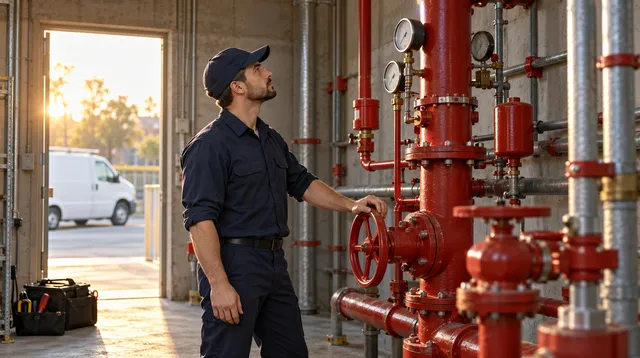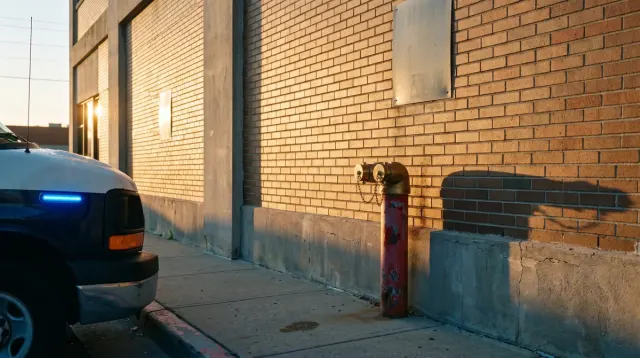
If you run a fire protection company, two standards dictate most of your recurring revenue and most of your liability: NFPA 25 for water-based systems and NFPA 72 for fire alarm systems. Between them, they spread inspection, testing, and maintenance (ITM) tasks across intervals from weekly to every five years. A missed interval is both a compliance failure for your customer and a missed billable visit for you.
This page consolidates the common frequencies into reference charts you can scan in seconds, then covers the edition caveats that trip people up.
Read this before using the charts. NFPA 25 and NFPA 72 are revised on a regular cycle, and the edition your jurisdiction enforces is set by the locally adopted code, not by the newest book on the shelf. States and cities amend these standards, and your authority having jurisdiction (AHJ) may impose stricter intervals. The charts below are a reference summary drawn from commonly cited requirements in recent editions. They are not the standard. Always verify against the adopted edition and your AHJ before building or signing off on an inspection program.
Jump to the frequency charts
- NFPA 25 testing frequency chart: water-based ITM (sprinklers, standpipes, fire pumps, valves, tanks)
- NFPA 72 testing frequency chart: fire alarm visual inspection and functional test schedules
Quick Reference: NFPA 25 & NFPA 72 Inspection Frequencies
The split between the two standards is clean in principle:
- NFPA 25 covers water-based fire protection systems: sprinkler systems, standpipe and hose systems, fire pumps, water storage tanks, and the valves that control them.
- NFPA 72 covers fire alarm and signaling systems: control panels, initiating devices, notification appliances, and supervising station communications.
In practice the standards overlap at the connection points. A waterflow switch is part of the sprinkler system and an initiating device on the alarm panel, so both standards have something to say about it. Where device types differ, the chart notes it.
NFPA 25 Water-Based ITM Frequency Chart
Chart note: NFPA 25. Summary of commonly cited NFPA 25 intervals. The edition and amendments your AHJ adopted control.
Sprinkler Systems
| Component / Task | Typical Frequency |
|---|---|
| Gauges on dry pipe and preaction systems (visual) | Weekly |
| Gauges on wet pipe systems (visual) | Monthly |
| Mechanical waterflow alarm devices (water motor gong) | Quarterly test |
| Vane-type and pressure switch waterflow alarm devices | Semiannual test |
| Sprinklers, pipe, fittings, hangers (visual from floor level) | Annual |
| Main drain test | Annual (quarterly where the supply runs through a backflow preventer or pressure-reducing valve) |
| Antifreeze solution test | Annual, before freezing weather |
| Dry pipe valve trip test (partial flow) | Annual |
| Dry pipe valve trip test (full flow) | Every 3 years |
| Gauge replacement or recalibration | Every 5 years |
| Internal pipe assessment | Every 5 years |
Sprinkler head sample testing runs on a longer clock: standard-response sprinklers are typically sample-tested at 50 years in service and every 10 years after that, fast-response sprinklers at 20 years and every 10 years thereafter. Dry sprinkler intervals have changed between editions. Recent editions cite 20 years with 10-year retests, while older editions required action at 10 years, so check the edition your AHJ enforces before scheduling.
Standpipe and Hose Systems
| Component / Task | Typical Frequency |
|---|---|
| Fire department connection (visual) | Quarterly |
| Gauges (visual) | Per system type, matching the sprinkler gauge intervals above |
| Flow test at the hydraulically most remote outlet | Every 5 years |
| Hydrostatic test of manual and semiautomatic dry standpipes, including FDC piping | Every 5 years |
The 5-year flow test verifies the system still delivers its design flow and pressure at the most remote hose connection. It is one of the most commonly deferred tests in the standard, and one of the first things a plan reviewer asks about after a renovation.
Fire Pumps
| Component / Task | Typical Frequency |
|---|---|
| No-flow (churn) test for electric pumps | Weekly, typically run at least 10 minutes |
| No-flow (churn) test for diesel pumps | Weekly, typically run at least 30 minutes |
| Full flow test at churn, 100%, and 150% of rated capacity | Annual |
Some editions and configurations allow reduced churn-test frequencies for certain electric pumps. That determination belongs to the adopted edition and your AHJ, not a default assumption.
Control Valves and Water Storage Tanks
| Component / Task | Typical Frequency |
|---|---|
| Sealed or unsupervised control valves (visual position check) | Weekly |
| Locked or electrically supervised control valves (visual position check) | Monthly |
| Control valve operation through full range, with tamper switch verification | Annual |
| Tank exterior (visual) | Quarterly |
| Tank interior inspection | Every 5 years (shorter intervals can apply depending on corrosion protection, so verify) |
Valve inspections look trivial on paper. They also catch one of the most common causes of sprinkler failure in fire events: a closed valve nobody knew about.
For field use, see the NFPA 25 sprinkler inspection checklist.
NFPA 72 Fire Alarm Inspection & Testing Frequency Chart
Chart note: NFPA 72. Summary of commonly cited NFPA 72 inspection and test intervals. The edition and amendments your AHJ adopted control.
NFPA 72 keeps two separate schedules: visual inspections (Table 14.3.1 in recent editions) and functional tests (Table 14.4.3.2). Most components follow a semiannual-inspection, annual-test rhythm, with a few exceptions worth memorizing.
| Component | Visual Inspection | Functional Test |
|---|---|---|
| Control equipment / panel | Semiannual | Annual |
| Batteries | Semiannual (corrosion, leakage, electrolyte) | Annual load/discharge testing (intervals vary by battery type) |
| Smoke detectors | Semiannual | Annual, plus sensitivity testing (see below) |
| Duct smoke detectors | Semiannual | Annual, with airflow verification |
| Restorable heat detectors | Semiannual | Annual |
| Non-restorable heat detectors | Semiannual | Typically replaced after 15 years in service |
| Manual pull stations | Semiannual | Annual |
| Notification appliances (horns, strobes) | Semiannual | Annual |
| Waterflow devices | Semiannual | Quarterly to semiannual by device type (coordinate with NFPA 25) |
| Supervisory devices (valve tamper switches) | Semiannual | Annual |
| Interface functions (elevator recall, HVAC shutdown, door release) | n/a | Annual |
| Emergency communications systems | Semiannual | Annual, including intelligibility verification |
For how to run each of these tests by device class, see NFPA 72 testing requirements. It covers test methods, pass criteria and records; intervals stay on this chart.
Smoke Detector Sensitivity Testing
One of the most commonly missed NFPA 72 requirements is sensitivity testing. The widely cited schedule: test within one year of installation, then every alternate year. After two consecutive tests showing the detector holding within its listed sensitivity range, recent editions allow the interval to extend, typically to a maximum of five years.
If your inspection records can’t show when each detector’s sensitivity was last verified, you can’t defend the extended interval. That is a recordkeeping problem before it is a testing problem.
Sensitivity note. Any extension of the sensitivity-test interval depends on consecutive in-range results in your records and on the edition your AHJ has adopted. Confirm against that edition and your AHJ before relying on an extended schedule. This summary alone does not authorize it.
For field use, see the NFPA 72 fire alarm inspection form.
Editions Change. Your AHJ Decides.
Three things make a generic frequency chart dangerous to follow blindly:
- Adopted editions lag. Plenty of jurisdictions still enforce editions several cycles old. The requirement that applies is the one in the adopted code, including anything the state or municipality amended.
- Intervals move between editions. Dry sprinkler testing and certain pump and valve provisions have all shifted in recent revision cycles.
- AHJs can go stricter. Occupancy type, system history, and local ordinance can all shorten intervals.
The operational answer is to treat frequencies as data, not memory: store the required interval on each device or system you maintain, tied to what your AHJ enforces, and let software do the date math.
How Forz Keeps These Schedules Straight
Forz’s fire inspection module was built around this problem. You register each system at a customer site and add the devices under it, each with a barcode and location description. Fire alarm, sprinkler, fire suppression, and emergency lighting are the default system types. Every device type carries its own inspection schedule, chosen from configurable frequencies: daily, weekly, biweekly, monthly, quarterly, semi-annual, annual, and every 2 through 7 years. That range covers the recurring test intervals in the charts above, from weekly churn tests to 5-year internal pipe assessments. Longer clocks, such as 10-year sprinkler sample retests or 15-year heat detector replacement, go in a date custom field on the device.
A single device can carry multiple inspection types with independent due dates, such as a monthly visual and an annual functional test on the same pull station. That matches how NFPA 72’s two-table structure works in the field. Technicians record Pass, Fail, or Bypass with photos on the mobile app during the visit, Forz calculates the next due date from the frequency, and your customers download the inspection PDFs themselves from the customer portal instead of calling your office. Technician certifications live on each user profile, so dispatch can confirm the tech you’re sending is qualified for the work before the route goes out. See how fire protection contractors run ITM programs on Forz.
Every module is included at $50/user/month billed annually or $60 month-to-month, with a 10-user minimum, plus a free standard data import and onboarding. There’s no compliance-module upsell. If you want to see a recurring inspection program set up end to end, book a demo and bring a real customer site to model.
Frequently Asked Questions
What is the difference between NFPA 25 and NFPA 72?
NFPA 25 governs inspection, testing, and maintenance of water-based fire protection systems (sprinklers, standpipes, fire pumps, tanks, and valves). NFPA 72 governs fire alarm and signaling systems (panels, detectors, pull stations, notification appliances, and monitoring). Most commercial buildings need ITM programs under both.
Which edition of NFPA 25 or NFPA 72 applies to my building?
The edition referenced by your jurisdiction’s adopted fire and building codes, as amended locally. It is often not the newest edition. Your AHJ, typically the fire marshal or fire prevention bureau, is the authority on which edition and amendments apply.
Who is allowed to perform these inspections and tests?
Both standards require qualified personnel. In many jurisdictions, trained owner staff can handle simple visual checks like weekly valve and gauge inspections, while functional testing is performed by qualified contractors. Some states also license fire protection ITM work specifically. Verify the licensing rules where you operate.
What happens when a test fails or an interval is missed?
Failures are documented as deficiencies or impairments and reported to the owner. Serious impairments commonly trigger mitigation steps such as notifying the AHJ and posting a fire watch until the system is restored. A missed interval leaves the owner out of compliance and exposed if a loss occurs, which is why automated scheduling matters.
How long should inspection records be kept?
NFPA standards generally require keeping ITM records long enough to compare against the next test of the same type. A commonly cited rule is at least one year after the next inspection, with longer retention for infrequent tests. Many contractors keep the full history for the life of the system, since storage is cheap and disputes are not.