A Category 5 test is the one visit where the car carries rated load while your crew trips the safeties, sets down on the buffers and proves the brake. The test items are written down in the code and on your state’s form. The logistics aren’t, and that’s where a Cat 5 day falls apart: the weights aren’t on site, the witness isn’t booked, or the building didn’t know the car would be down.
This guide covers the prep, the day itself and the records afterward. For what Category 1 and Category 5 mean and how often each is due, see our ASME A17.1 Category 1 vs Category 5 guide. Definitions stay there.
Summary reference, not the code. Test items are paraphrased from the ASME A17.1 Part 8 periodic inspection and test requirements in recent editions and from state Cat 5 report forms (sources below). The edition your AHJ adopted, its local rules and the manufacturer’s procedures control.
Cat 5 test items to plan the day around
State test forms make the scope easy to see because they list it line by line. Nebraska’s traction elevator safety test report, for example, says the Category 5 items are “All Category 1 items and items below,” then lists governor trip speed, governor rope pull-through, car safety at rated load and rated speed, counterweight safety at no load and rated speed, car and counterweight buffers, brake holding at 125% of rated load and an emergency stop at 125% of rated load and rated speed. Ohio’s five-year form asks the same kind of questions: safety tests with rated load, the normal brake tested with 125% of rated load, buffers at rated speed and load, and whether test tags were attached.
So plan a Cat 5 as a Cat 1 visit with three extra jobs: getting rated load (and in some tests more than rated load) into the car, running the full-speed tests safely, and putting the unit back in service with fresh tags and a signed report.
The exact list changes with equipment type. Hydraulic units, drum machines, wood-rail installs and older equipment each have their own rules, and dumbwaiters and material lifts can follow a different schedule. Check your AHJ’s form for the unit type before you build the job.
Six to twelve months out: build the Cat 5 calendar
The five-year date is known the day the last Cat 5 passes, so there’s no reason for it to surprise anyone. What changes is how many fall in the same month. A route with a few hundred units can easily stack a dozen Cat 5s into one quarter.
For each unit due next year, pull:
- The last Cat 5 date and how your AHJ counts the window. NYC, for instance, counts five years from the month of the most recent Cat 5 and, per its published rules as of October 2026, wants the filing within 21 days of the test.
- Rated load and rated speed from the data plate, so weights and crew are sized right.
- Equipment type (traction, hydraulic, drum) and safety type, which decide which form and test items apply.
- Whether the same building has other units due, so you can stage weights once.
- Who has to witness, and how far ahead that person books.
If your AHJ needs a state inspector or Qualified Elevator Inspector present, the witness’s calendar sets the date. Book that first, then fit weights and crew around it.
Test weights: the part that slips
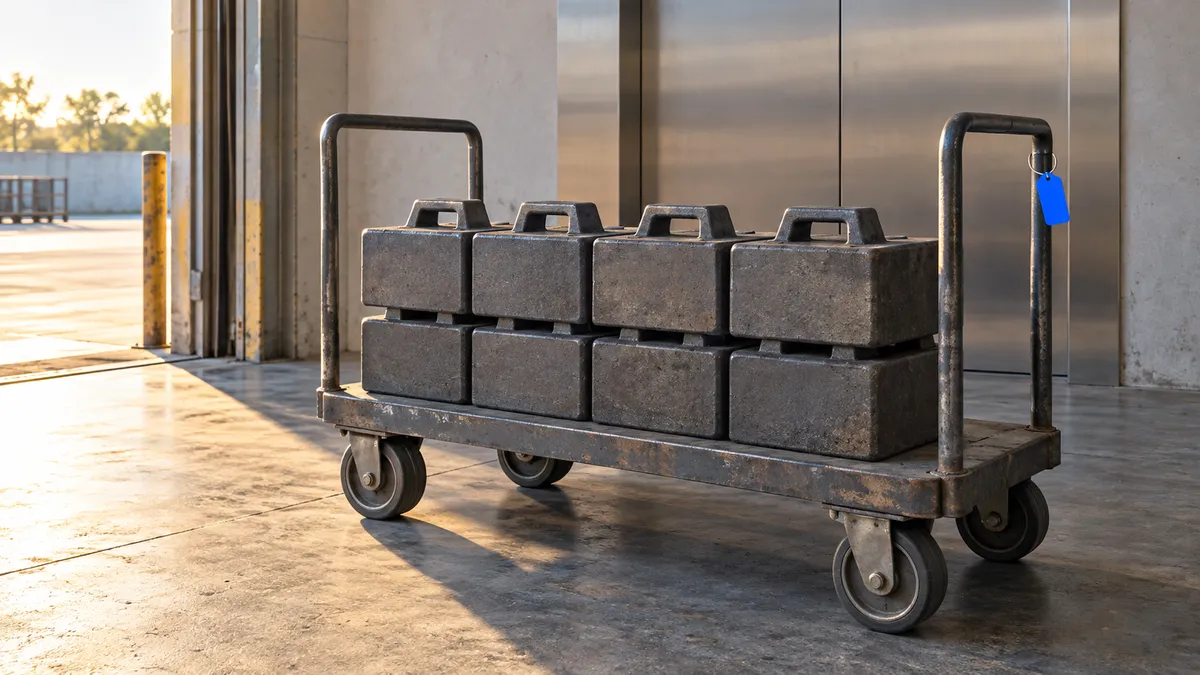
Rated load means real weight in the car. For example, on a car with a 3,500 lb capacity, rated load means 3,500 lb of test weights in the car, and a brake test at 125% of rated load means 4,375 lb in total. The figure is illustrative; use the capacity on your data plate and the load your form specifies. Treat weight logistics as its own job with its own owner.
Things to settle before the day:
- Where the weights come from. Your own trailer, a rental, or another branch. Know the count and total weight, and keep any certification paperwork your AHJ or company requires.
- How they get to the car. Loading dock access, freight elevator or not, carts, and the floor load path from the dock to the hoistway door.
- Who moves them. Moving thousands of pounds of weights is a crew job. Plan the people as well as the mechanic.
- Staging for multiple cars. If a building has three units due, test them back to back and move the weights car to car.
Record the weight used in the report. An inspector who reviews the file later should see the number, not “full load.”
Witness, notice and building coordination
A Cat 5 takes a car out of service, and the brake and buffer tests aren’t something tenants should walk into. The building needs notice, and the property manager needs it in writing.
Send the building a short notice with the unit ID, the date, which cars will be out, and who to call. In a single-elevator building, ask how residents with mobility needs will get around and agree on it before the date. Hospitals, high-rises and buildings with only one service car often need a written plan for the day.
Reconfirm the witness a few days before the test, or earlier if your AHJ’s rules require it. If the witness cancels, you need to know before the weights roll.
On the day: run order and what to capture
Every contractor has its own procedure, and the manufacturer’s instructions come first. What follows is the information most state forms ask you to record, grouped so the tech can fill it in as they go. Leave values blank on your form template. Don’t preprint pass thresholds; let the form and code edition supply them.
| Group | Capture on the form |
|---|---|
| Unit and test | Building, state/unit ID, capacity, rated speed, test date, test type (Cat 5), weight used, mechanic, license number, witness name and QEI or inspector number if required |
| Category 1 items | Every Cat 1 item for this equipment type, pass/fail/N/A (the Cat 1 checklist template covers these) |
| Governor | Tripping speed found, rope pull-through force where required, seal condition |
| Car safety | Rated load, rated speed result, slide distance, car level after set |
| Counterweight safety | Result and slide distance where equipped |
| Buffers | Car and counterweight results, oil buffer return where applicable |
| Brake | Result with 125% of rated load where your form requires it |
| Close-out | Test tags attached, jumpers removed, unit returned to service, signatures |
Photos help when a result is questioned later: the weights in the car, the tag on the governor, and the controller with jumpers removed.
After the test: tags, filing and the MCP
When the unit passes, the work isn’t finished until three things happen.
- Tags go on. Ohio’s five-year form asks directly whether test tags were affixed. Make it a form line, not a memory.
- The report goes where your AHJ wants it. Some states want the Cat 5 report filed with the state. Others want it left with the on-site documents for the next inspection. Some jurisdictions set a short filing deadline counted from the test date, so put it on the job record. Build the deadline into the job record so the office can see it.
- The Maintenance Control Program gets the record. The test results belong in the unit’s MCP records along with the Cat 1 history. Our elevator maintenance checklist shows the record structure.
If the unit fails, write down the deficiency, the fix, who did it and the retest date. A clean retest record matters as much as the original test.
Common reasons a Cat 5 gets rescheduled
- Witness not confirmed, or booked for the wrong unit.
- Weights short of the amount needed for the brake test.
- No dock or freight access on the test date.
- Building not told, so the property manager pulls the car back into service.
- Old report or data plate info missing, so the crew can’t confirm rated load on site.
Every one of these gets fixed in the office before the crew leaves.
Tracking Cat 5 dates in software
The code logic is an annual test plus a five-year test. The work is keeping hundreds of anniversaries, witnesses and filings straight. That’s what elevator service software should handle for you.
In Forz, each elevator is a device record at its customer site, and one unit can carry an annual Cat 1 inspection and an every-5-years Cat 5 inspection with separate due dates. Forz calculates the next due date when a result is recorded. Techs log pass/fail results with photos from the field, and customers can pull inspection PDFs from their portal. See the elevator services page for how it’s set up, and pricing for plans ($50 per user per month billed annually, $60 month-to-month, 10-user minimum).
Forz doesn’t book your witness or move your weights. If your shop runs a handful of units, a shared calendar and a good paper form may be enough.
FAQ
Do I still run the Cat 1 items?
Yes, on the forms we reviewed. For how overlap years work, see our Category 1 vs Category 5 guide.
How much weight goes in the car?
Rated load in the car for the car safety and car buffer tests, no load (an empty car) for the counterweight safety and buffer tests, and 125% of rated load for the brake tests where your form calls for them. Check the data plate and the form for your equipment type.
Who has to be there?
A qualified mechanic performs the test. Whether a state inspector, QEI or third-party agency must witness depends on your AHJ. NYC, for example, has category tests performed and witnessed by approved independent third-party agencies licensed by its Department of Buildings.
Where do I file the Cat 5 report?
It depends on the AHJ. Some states collect the report, others want it kept on site with the MCP. Check your state’s elevator program page.
Sources
- Nebraska State Fire Marshal, Traction Elevator Safety Test report form
- Ohio Department of Commerce, Annual and 5-Year Electric Elevator Safety Test Form
- NYC Department of Buildings, Elevator compliance (category testing and filing)
- ASME A17.1/CSA B44, Safety Code for Elevators and Escalators (Part 8, periodic inspections and tests), via the AHJ-adopted edition.